
Complete Guide to Becoming a Certified Fashion Stylist in India (2026 Edition)
An insider's editorial breakdown of how aspiring Indian stylists qualify in 12 weeks after Class 12, why sketching or sewing skills are unnecessary, what personal and bridal stylists earn in rupees, and how to verify Skill India and university certification.

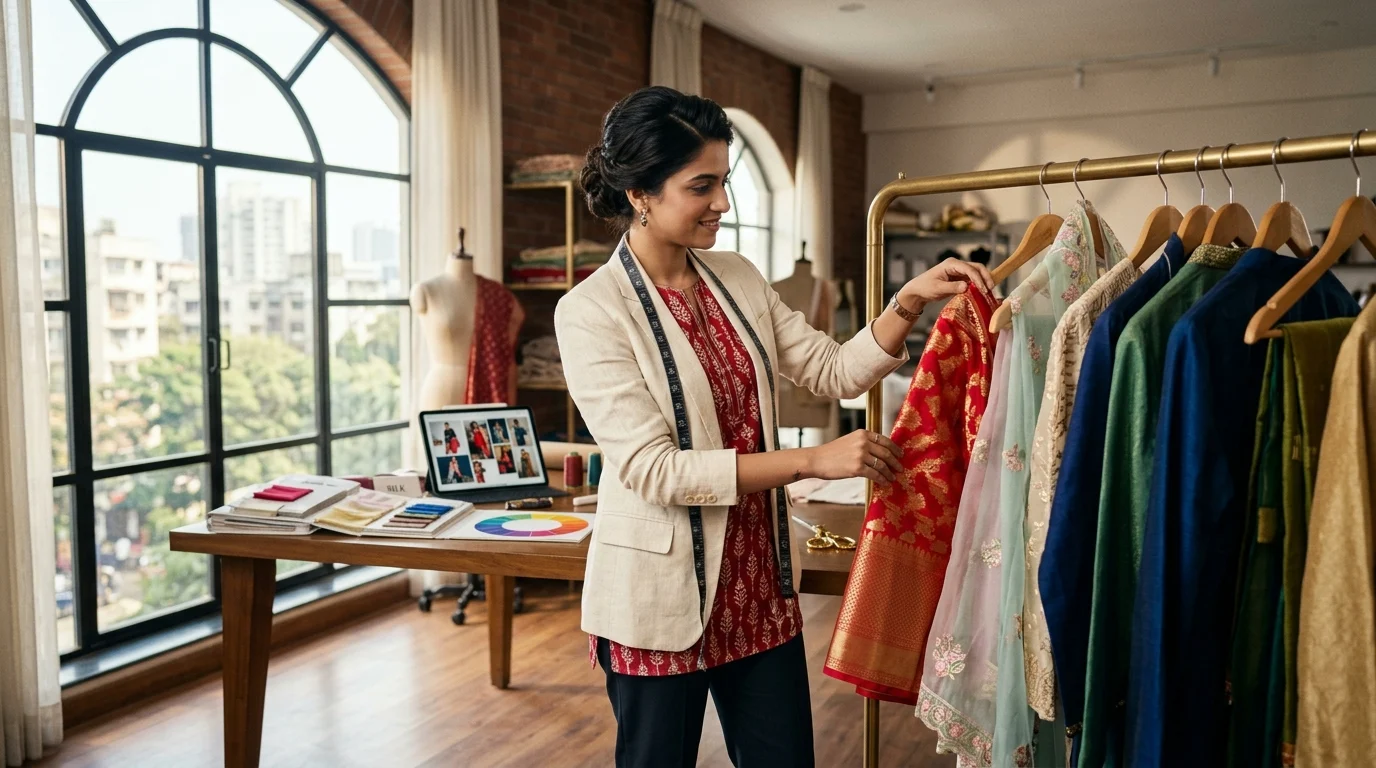
Table of Contents Tap to expand +
- What Does a Fashion Stylist Actually Do in India?
- Why Certified Stylists Are in High Demand in 2026
- Do You Need a 4-Year NIFT or Pearl Degree?
- How to Become a Certified Stylist: 6-Step Roadmap
- Top 7 Styling Career Paths & ₹ Salaries (2026)
- What Tools Are Inside a Professional Stylist Kit?
- How to Verify if a Certificate Is Legitimate
- Choosing Between 4-Week, 8-Week & 12-Week Tracks
- Frequently Asked Questions
To become a certified fashion stylist in India, complete Class 12 in any stream and enrol in an 8 to 12 week certification programme affiliated with Medhavi Skills University (MSU) and Skill India. Master body silhouette analysis, Indian colour theory, physical draping tools, and AI moodboarding while building a 5-shoot portfolio to earn ₹4.5L to ₹15L+ annually.
You can become a certified fashion stylist in India within 12 weeks after Class 12 by completing a Skill India certified styling course and building a practical lookbook portfolio.
Every festive season across India, in cities from Mumbai and Delhi NCR to Indore, Jaipur, Lucknow, and Chandigarh, thousands of women act as unpaid fashion stylists for their social circles. Friends call them before buying a wedding lehenga. Colleagues ask them which blazer cut works for a board presentation. Cousins rely on them to coordinate family outfits for Sangeet nights.
Yet when these same women consider turning their natural eye for clothing into a formal, income-generating profession, they hit a wall of confusion. Most assume that entering the fashion industry requires passing a competitive entrance exam after Class 12, relocating to a metro campus for four years, learning how to stitch garments on an industrial machine, and spending ₹8 Lakhs to ₹15 Lakhs in tuition fees.
In 2026, that assumption is completely outdated. The rapid growth of Indian e-commerce marketplaces, regional bridal couture, executive image consulting, and AI moodboarding tools has turned fashion styling into a standalone, high-income career path. This guide walks you through the exact steps, qualifications, toolkits, accreditation checks, and rupee salary benchmarks required to go from an outfit enthusiast to a Certified Fashion Stylist in 90 days.
Section 01 • Core Role & Industry Distinction What Does a Fashion Stylist Actually Do in India? (And How Is It Different from Fashion Design?)
A fashion stylist in India selects, coordinates, drapes, and fits finished garments, footwear, and jewellery to build complete visual looks for private clients, brides, e-commerce catalogues, and film shoots. Unlike fashion designers who sketch patterns and manufacture clothes, stylists require zero sewing or drawing skills and focus on proportion, colour theory, and commercial presentation.
If you have ever held back from applying to a fashion school because you cannot sketch anatomical croquis figures or thread a bobbin, here is the most important distinction in the garment trade: fashion designers manufacture individual clothes; fashion stylists curate complete human appearances.
A fashion designer works inside a production studio or factory. Their work begins with raw yardage, paper patterns, khaka pinning, embroidery sampling with karigars (artisans), and size grading. It can take a designer four months to take one bridal lehenga or tailored jacket from a sketchpad to a showroom rack.
A certified fashion stylist steps in once the clothes are already hanging on the rack. When a bride walks into a multi-designer store with a ₹3 Lakh budget and feels overwhelmed by 400 heavy lehengas, she does not need someone to stitch a new outfit. She needs a trained eye who understands whether a sweetheart blouse neckline balances her shoulder width, whether warm antique gold zari flatters her skin undertone better than icy silver work, and how to drape two dupattas so she can dance comfortably at her Sangeet.
| Comparison Dimension | Certified Fashion Stylist | Traditional Fashion Designer |
|---|---|---|
| Core Daily Craft | Curating outfits, body proportion mapping, seasonal colour analysis, trousseau planning, and shoot art direction. | Sketching silhouettes, pattern drafting, textile dyeing, garment stitching, and factory quality control. |
| Drawing & Sewing Needed? | None. Zero sketching, pattern making, or machine stitching required. | Mandatory. Requires years of technical illustration and garment construction. |
| Time to Qualify | 8 to 12 Weeks via intensive practical certification. | 3 to 4 Years via full-time campus degree or diploma. |
| Typical Tuition & Setup Cost | ₹12,000 to ₹35,000 (Includes physical styling tool kit). | ₹4,50,000 to ₹15,00,000+ (Plus ₹5L+ for machines and sample stock). |
| Primary Workspaces | Client wardrobes, Zoom consultations, retail boutiques, e-commerce photo studios, and wedding venues. | Tailoring units, textile mills, sampling rooms, and manufacturing workshops. |
| Time to First Client Invoice | 60 to 90 days from starting structured training. | 3 to 5 years after graduation and production internships. |
Six Practical Deliverables You Execute as an Indian Stylist
Inside Style Mantra's certification programmes, students move away from textbook theory and learn to execute the six concrete deliverables that Indian clients and studios pay for every day:
- Body Silhouette & Proportion Diagnosis: Taking accurate measurements and identifying whether a client has an Hourglass, Pear (Triangle), Rectangle, Inverted Triangle, or Oval silhouette, then prescribing exact garment cuts (such as high-waist wide-leg trousers, A-line kurtas, or structured peplum tops) that create visual balance.
- Indian Undertone & Colour Palette Mapping: Using physical colour wheels and hex-code charts to distinguish warm golden, olive, neutral, and cool undertones across fair, wheatish, and deep dusky Indian complexions.
- Closet Audits & 30-Piece Capsule Wardrobes: Reviewing a client's existing wardrobe in person or via video call using the four-pile audit method (Keep, Alter, Repurpose, Eliminate) and assembling a 30-piece capsule that mixes and matches into 70+ work and social outfits.
- End-to-End Bridal Trousseau & Family Styling: Planning cohesive lookbooks across Haldi, Mehendi, Sangeet, Cocktail, Wedding Pheras, and Reception, including bridal jewellery trials, groom sherwani coordination, and on-venue draping.
- E-Commerce Catalogue & Commercial Shoot Styling: Managing studio racks, steaming garments, pinning fits with styling clips, and styling 30 to 45 SKU outfits per day for online marketplaces and D2C fashion labels.
- AI Moodboarding & Clickable Digital Lookbooks: Generating visual concept boards using AI tools and handing clients interactive PDF lookbooks embedded with direct shopping links.
Section 02 • Economic Drivers & Market Scope Why Are Certified Fashion Stylists in High Demand Across India in 2026?
Demand for certified fashion stylists in India has surged in 2026 due to four economic drivers: India's ₹1.5 Lakh Crore wedding industry, rapid weekly catalogue shoots by e-commerce platforms like Myntra and Nykaa Fashion, executive personal branding, and rising disposable income across Tier 2 and Tier 3 cities.
A decade ago, hiring a personal or commercial stylist in India was restricted to film stars in Mumbai or industrialist families in Delhi. If an aspiring stylist lived in Jaipur, Indore, Surat, or Lucknow, she believed she had to pack her bags and move to a metro city just to find work.
Today, four structural shifts in the Indian economy have turned styling into a borderless profession where independent practitioners book clients locally and online:
1. The ₹1.5 Lakh Crore Indian Wedding & Trousseau Market
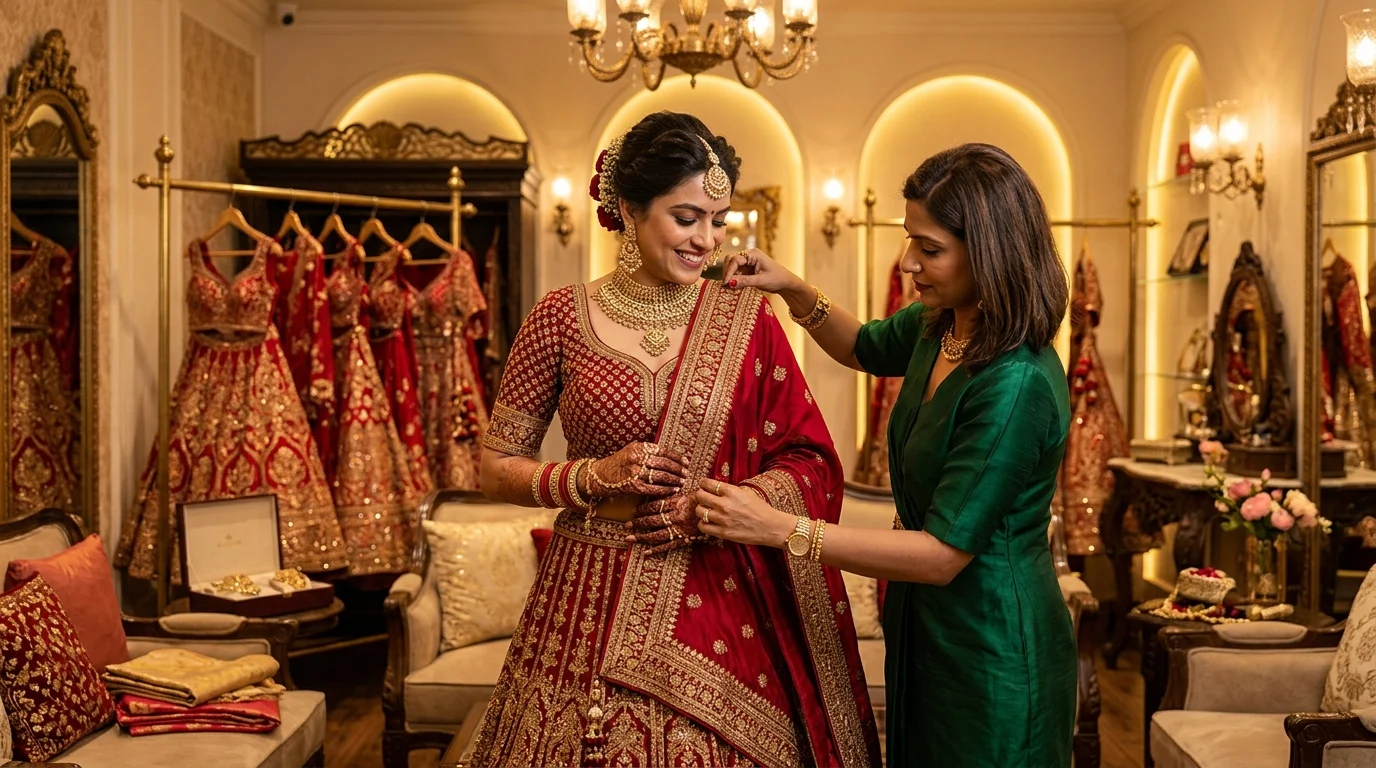
Indian weddings are no longer single-day ceremonies. They are four-to-six-day visual productions documented by candid photographers, drone crews, and wedding content creators. Modern brides, grooms, and their immediate families now budget for a dedicated wedding stylist just as naturally as they book a makeup artist. A stylist who charges ₹35,000 to ₹1,00,000 to source outfits, coordinate family colour themes, oversee blouse fittings, and handle on-day dupatta pinning often saves the family more than her fee by preventing costly shopping mistakes.
2. E-Commerce Marketplaces & D2C Catalogue Velocity
Every single week, platforms like Myntra, Ajio Luxe, Nykaa Fashion, Tata CLiQ, and over 6,000 homegrown Indian D2C clothing brands shoot thousands of new product listings. An e-commerce brand lives or dies by how well a ₹2,400 kurta set or a ₹6,000 linen blazer drapes on camera. Production studios hire certified e-commerce and commercial stylists on daily rates (₹4,000 to ₹12,000 per shoot day) or full-time retainers to keep their catalogue conversion rates high and return rates low.
3. Executive Presence, Startup Founders & Creator Branding
In a video-first business culture, corporate CXOs, doctors, architects, lawyers, startup founders, and digital creators appear on LinkedIn, YouTube podcasts, and stage panels every week. These professionals have purchasing power but zero time to browse retail stores. They hire certified personal stylists to audit their closets and deliver ready-to-wear capsule wardrobes.
4. The Tier 2 & Tier 3 City Wealth Boom + NRI Virtual Consultations
High-net-worth families and business owners in Indore, Jaipur, Lucknow, Chandigarh, Surat, Ludhiana, Nagpur, and Coimbatore spend heavily on luxury ethnic wear, destination weddings, and international travel. Yet these cities have almost no local styling academies. A certified stylist operating in a Tier 2 city commands strong fees with minimal competition, while also conducting virtual Zoom consultations for Indian diaspora (NRI) clients in Dubai, London, Toronto, and Singapore.
Section 03 • Education Comparison & ROI Do You Need a 4-Year NIFT or Pearl Academy Degree to Become a Fashion Stylist in India?
No, you do not need a 4-year NIFT or Pearl Academy degree costing ₹4.5 Lakhs to ₹15 Lakhs to become a fashion stylist in India. Fashion employers, production houses, and private clients hire stylists based on practical portfolio quality, on-set execution speed, AI moodboarding skills, and government-recognised Skill India certification completed in 12 weeks.
When a student or her parents evaluate fashion education in India, they usually face an uncomfortable trade-off. Traditional brick-and-mortar institutes require up to four years of campus attendance and ₹4.5 Lakhs to ₹15 Lakhs in tuition and hostel expenses. Worse, most four-year degree curricula dedicate over 75% of class hours to textile science, historic costume theory, and garment manufacturing rather than commercial styling and client acquisition.
On the other end of the spectrum, ₹3,000 pre-recorded video portals and weekend Instagram webinars offer zero practical evaluation, no physical styling tools, and unverified participation PDFs that hold no weight with corporate employers or Indian families.
Style Mantra was built by Skill Mantra to solve this exact educational gap: delivering an intensive 12-week live online certification affiliated with Medhavi Skills University (MSU) and Skill India, supported by a dispatched 13+ piece physical welcome kit and a dedicated placement cell.
| Evaluation Factor | 4-Year Campus Colleges (NIFT / Pearl) | Low-Cost Recorded Portals | Instagram Webinar Coaches | Style Mantra (12-Week Certification) |
|---|---|---|---|---|
| Tuition Investment | ₹4,50,000 to ₹15,00,000 | ₹5,000 to ₹12,000 | ₹10,000 to ₹35,000 | ₹12,000 to ₹35,000 (4, 8 & 12-wk tracks) |
| Course Duration | 1 to 4 Years | Self-paced (Low completion) | 2 Days to 3 Weeks | 12 Weeks Intensive (90 Days) |
| Learning Format | Offline campus only (City relocation needed) | Pre-recorded videos only | Casual group Zoom calls | Live Online + Recorded LMS + Practical Projects |
| Physical Styling Kit | Purchased separately by student | None | None | Dispatched 13+ Piece Welcome Kit Included |
| Accreditation Value | University Degree / Diploma | Unverified private PDF | No formal recognition | Medhavi Skills University (MSU) & Skill India Certified |
| AI Styling Workflow | Rarely covered in traditional syllabus | None | Basic overview | Dedicated AI Moodboard & Virtual Styling Modules |
| Placement & Portfolio | Campus placement cell | None | None | Dedicated Placement Cell & 5-Project Portfolio |
"When e-commerce studios, bridal houses, or celebrity agencies interview a stylist in 2026, nobody asks to see a four-year sewing transcript. They ask to see five sharp lookbooks, how fast you can pin and steam 30 garments on set, and whether you hold a verified skill credential. You can build all three in 90 days."
Hina Arora, Founder & Lead Fashion Styling Educator at Style Mantra (16+ Years in Fashion & Education)
Section 04 • The 90-Day Execution Blueprint How Do You Become a Certified Fashion Stylist in India? The 6-Step Roadmap
Becoming a certified fashion stylist in India follows six structured steps over 12 weeks: (1) master Indian body silhouettes, (2) learn skin undertone colour theory, (3) practise draping with a physical tool kit, (4) adopt AI moodboarding tools, (5) build a 5-shoot commercial portfolio, and (6) earn your Skill India & MSU certificate.
Whether you are a recent Class 12 graduate, a college student studying commerce or humanities, a working corporate professional looking for a creative exit, or a homemaker restarting your career, the progression from beginner to paid stylist follows six structured milestones over 12 weeks:
Master Indian Body Silhouettes & Proportion Mapping
Your training begins with anatomical proportion rather than fleeting fashion trends. Using the dual-sided measuring tape from your welcome kit, you learn to diagnose the five core body silhouettes (Hourglass, Pear/Triangle, Rectangle, Inverted Triangle, and Oval) across real Indian body proportions. You practise selecting necklines, sleeve lengths, saree blouse cuts, lehenga waistbands, and trouser rises that flatter petite, tall, and curvy clients without ever making a client feel self-conscious.
Learn Seasonal & Digital Colour Theory for Indian Skin Undertones
Western colour guides often fail on Indian complexions because they ignore olive and warm golden-brown undertones. In Weeks 3 and 4, you use your printed colour theory manual and swatch wheel to diagnose warm, cool, olive, and neutral undertones across fair, wheatish, and deep dusky skin tones. You learn which jewel tones, pastels, earth shades, and metallic embroideries (antique gold, rose gold, silver mukesh) illuminate a client's face in both daylight and studio lighting.
Practise Hands-On Draping, Fabrics & On-Set Fixes with Your Physical Kit
Theory turns into tactile skill during Weeks 5 and 6. You learn to identify Indian heritage textiles (Kanjeevaram, Banarasi brocade, Chanderi, Maheshwari, Organza) alongside commercial blends. Using your physical welcome kit (fabric shears, double-sided body tape, styling pins, and makeup brushes), you practise 12 contemporary saree and dupatta drapes, instant waist-cinching techniques, and emergency on-set garment fixes.
Integrate AI Moodboarding & Digital Lookbook Workflows
Modern clients expect visual clarity before they spend ₹50,000 on shopping. You learn how to use generative AI tools (including Midjourney concept prompts) and Canva Pro templates to assemble agency-grade pitch decks in 20 minutes. You also master virtual wardrobe auditing workflows over Zoom and build clickable PDF shopping decks embedded with direct retail links from Myntra, Ajio Luxe, Nykaa Fashion, and designer boutiques.
Build a 5-Project Commercial, Bridal & Personal Styling Portfolio
In the fashion industry, your portfolio is your resume. Under direct faculty mentorship inside the 12-Week Professional Fashion Styling Programme, you complete five real-world portfolio projects: a full closet audit and 30-piece capsule wardrobe, a multi-event bridal trousseau lookbook, an e-commerce catalogue styling sequence, an Indo-Western editorial concept deck, and an executive makeover case study.
Earn Your Medhavi Skills University & Skill India Certificate & Launch
Upon completing your portfolio assessment, you are awarded your official certificate affiliated with Medhavi Skills University (MSU) and aligned with Skill India. Our Placement & Career Cell then guides you through setting your consultation rates, drafting client service agreements, optimising your Instagram and LinkedIn profiles, and applying for studio shoots, boutique partnerships, and private client consultations.
Section 05 • Career Specialisations & Rupee Earnings What Are the Top Fashion Styling Career Paths and Salaries in India (2026)?
Certified fashion stylists in India pursue seven high-growth career tracks: Personal Styling, Bridal Trousseau Styling, E-Commerce Catalogue Styling, Celebrity Styling, Commercial Ad Styling, Editorial Styling, and Corporate Image Consulting. Beginner stylists earn ₹30,000 to ₹50,000/month, scaling to ₹80,000 to ₹2,50,000+/month within 1 to 3 years.
Unlike rigid corporate roles with fixed annual increments, fashion styling allows you to stack multiple income streams. A certified stylist might work three days a week on e-commerce studio shoots, conduct two virtual wardrobe consultations on weeknights, and style six high-ticket weddings during the October-to-March bridal season. Below is the realistic 2026 fee and salary breakdown across India's seven primary styling tracks (explore each role in depth on our Career Paths Hub):
| Styling Career Specialisation | Beginner (0–1 Year) | Established (1–3 Years) | Senior / HNI / Agency Lead | Typical Clients & Employers |
|---|---|---|---|---|
| 1. Personal Stylist & Image Consultant | ₹3,000 – ₹8,000 / consult (₹30k – ₹50k/mo) | ₹15,000 – ₹35,000 / package (₹60k – ₹1.2L/mo) | ₹50,000 – ₹1,20,000 / client (₹1.5L – ₹3L+/mo) | Working professionals, founders, homemakers, NRI clients. |
| 2. Bridal & Wedding Trousseau Stylist | ₹15,000 – ₹30,000 / wedding | ₹45,000 – ₹85,000 / wedding | ₹1,00,000 – ₹2,50,000+ / wedding | Brides, grooms, wedding planners, bridal couture labels. |
| 3. E-Commerce & Catalogue Stylist | ₹3.6L – ₹5.2L / year (or ₹3,500 – ₹5,000/day) | ₹6L – ₹9.5L / year (or ₹7,000 – ₹12,000/day) | ₹12L – ₹18L+ / year (Lead Catalogue Stylist) | Myntra, Nykaa Fashion, Ajio, Tata CLiQ, D2C apparel brands. |
| 4. Celebrity & Red-Carpet Stylist | ₹20,000 – ₹35,000 / mo (Associate Stylist) | ₹65,000 – ₹1,25,000 / mo (Independent Stylist) | ₹25,000 – ₹1,00,000+ / look (₹2.5L – ₹5L+/mo) | Bollywood & regional actors, OTT talent, PR agencies. |
| 5. Commercial, Media & Ad Film Stylist | ₹5,000 – ₹10,000 / shoot day | ₹15,000 – ₹30,000 / shoot day | ₹40,000 – ₹75,000+ / campaign | Ad production houses, OTT promos, TV commercials, music videos. |
| 6. Editorial & Fashion Journalism Stylist | ₹4,000 – ₹8,000 / spread | ₹50,000 – ₹90,000 / mo | ₹1,20,000 – ₹2,20,000+ / mo | Digital magazines, luxury brand lookbooks, fashion PR firms. |
| 7. Runway & Show Production Stylist | ₹4,000 – ₹7,500 / show day | ₹15,000 – ₹35,000 / show | ₹60,000 – ₹1,50,000+ / showcase | Lakmé Fashion Week, FDCI, couture designers, jewellery shows. |
How New Graduates Scale to ₹1,00,000/Month in Their First Year
Because a short-format practical certification costs between ₹12,000 and ₹35,000 rather than ₹10 Lakhs, most Style Mantra graduates recover their entire tuition fee within their first two or three paid client bookings:
- Months 1 to 3 (Certification & Beta Launch • Target: ₹15,000 to ₹30,000/month): Complete your 12-week live training, document 3 beta wardrobe makeovers for before-and-after portfolio proof, and book your first 2 paid closet audits or catalogue shoot days.
- Months 4 to 6 (Local Boutique & Bridal Partnerships • Target: ₹45,000 to ₹75,000/month): Partner with 3 local designer boutiques or bridal makeup artists in your city for mutual client referrals. Deliver 4 personal styling packages and 1 wedding trousseau consultation per month.
- Months 7 to 12 (Retainers, Bridals & Virtual NRI Clients • Target: ₹1,00,000 to ₹1,50,000+/month): Combine 2 multi-event wedding styling bookings, 2 corporate executive retainers, and remote Zoom lookbook consultations for overseas Indian diaspora clients.
Section 06 • Physical & Digital Equipment What Tools Are Inside a Professional Fashion Stylist Kit in 2026?
A professional fashion stylist kit in 2026 combines a 13+ piece physical emergency and measurement kit (dual-sided measuring tape, colour wheel manual, fabric shears, double-sided body tape, styling clips, and makeup brushes) with an AI digital stack for instant moodboarding, virtual closet audits, and clickable lookbooks.
One of the biggest reasons purely video-based online courses fail is that fashion is a physical craft. You cannot understand fabric weight, colour wheel contrast, or emergency garment pinning just by looking at slides on a screen.
To solve this, Style Mantra dispatches a 13+ piece Physical Welcome Kit directly to your doorstep within 48 to 72 hours of enrolment. When you open that box before your first live session, you hold the exact instruments working stylists carry onto commercial shoot floors and bridal consultations:
Part A: The 13+ Piece Dispatched Physical Styling Kit
- Dual-Sided Body Measuring Tape: High-precision centimetre and inch tape for mapping bust, waist, hip, shoulder, and inseam proportions accurately.
- Printed Guide Books & Colour Theory Manual: Tactile study manuals and colour wheels for diagnosing warm, cool, olive, and neutral skin undertones during live exercises and client visits.
- Professional Fabric Shears & Seam Ripper: Sharp styling shears for trimming loose threads, removing retail tags cleanly, and opening basted jacket vents on shoot days.
- Double-Sided Styling Tape, Body Tape & Pin Assortment: Essential emergency tools for securing deep bridal blouse necklines, holding saree pleats in place, eliminating shirt button gaps, and creating temporary hem adjustments without damaging loaned designer clothes.
- Professional Makeup & Grooming Brush Set: Core beauty tools for demonstrating grooming direction and coordinating hair and makeup finishes on set.
Part B: The 2026 AI & Digital Styling Stack
- Generative AI Concept & Moodboard Tools: Creating custom bridal, editorial, and commercial visual pitch decks in 15 minutes so clients can approve silhouettes before you step into a showroom.
- Digital Hex-Code Colour Swatching: Conducting accurate remote seasonal colour analysis using natural-light client photographs.
- Interactive Clickable Shopping Decks: Building shoppable PDF lookbooks where clients can click any outfit item (blouse, trouser, juttis, earrings) and purchase directly from Myntra, Nykaa Fashion, Ajio Luxe, or boutique websites.
Section 07 • Accreditation & Family Trust How Do You Verify if a Fashion Styling Certificate Is Legitimate in India?
A legitimate fashion styling certificate in India must be backed by a recognised university affiliation and national skill body rather than an unverified private workshop. Style Mantra's certification is affiliated with Medhavi Skills University (MSU), aligned with Skill India, and backed by parent body Skill Mantra's 11-year legacy of training 2,00,000+ students.
If you are discussing a fashion styling course with your parents, spouse, or family, they will rightly ask two questions: "Is this academy genuine?" and "Will this certificate be respected by employers and clients?"
Before paying fees to any online fashion academy, verify these five institutional benchmarks:
- Parent Organisation Track Record: Style Mantra is powered by Skill Mantra, an established Indian skill-development institution with 11+ years of operating experience, over 2,00,000 students professionally trained, and 50,000+ direct employment and career placements across India.
- University & Government Alignment: Every Style Mantra graduate receives a formal certificate affiliated with Medhavi Skills University (MSU) and aligned with the Government of India's Skill India framework.
- Physical Corporate Headquarters: Unlike anonymous social media pages, Style Mantra operates from its verified corporate office at Urban Cabin Cowork, Fortune Tower-2, Udyog Vihar, Sector 20, Gurgaon, Haryana.
- Tangible Physical Delivery: Dispatching a 13+ piece physical welcome kit via tracked courier within 48 to 72 hours of enrolment provides immediate, tangible proof of institutional commitment before classes even begin.
- Assessed Portfolio Graduation: Certificates are awarded based on practical styling assignments reviewed by senior faculty rather than passive video watching.
Section 08 • Selecting Your Certification Track Which Style Mantra Fashion Styling Programme Fits Your Career Goal? (4-Week vs 8-Week vs 12-Week)
Style Mantra offers three live online certification tracks: the 4-Week Basic Styling Programme for personal grooming and foundational theory, the 8-Week Intermediate Styling Programme for aspiring personal shoppers and wardrobe consultants, and the flagship 12-Week Professional Fashion Styling Programme covering bridal, celebrity, e-commerce, AI tools, and placement support.
Depending on whether you want to refine your own personal style, start a part-time wardrobe consulting practice from home, or launch a full-scale career across bridal, celebrity, and e-commerce shoots, you can choose from three structured live online tracks (or take our 2-minute Programme Fit Quiz):
| Programme Feature | 4-Week Basic Track | 8-Week Intermediate Track | 12-Week Professional Track (Flagship) |
|---|---|---|---|
| Ideal Learner Profile | Beginners exploring personal grooming, body shapes, and everyday outfit confidence. | Aspiring personal stylists, closet auditors, and virtual wardrobe consultants. | Career-focused stylists targeting Bridal, Celebrity, Commercial, E-Commerce & Personal Styling. |
| Certification Awarded | Skill India & MSU Aligned Certificate | Skill India & MSU Aligned Certificate | Advanced Professional Certificate (MSU & Skill India Recognised) |
| Dispatched Physical Kit | Starter Styling Kit | 13-Piece Physical Tool Kit | Full 13+ Piece Professional Welcome Kit |
| AI Styling & Lookbooks | Foundational Introduction | Core AI Moodboarding & Digital Decks | Complete AI Moodboarding, Virtual Consulting & Commercial Pitch Workflow |
| Portfolio & Placement | 1 Personal Capsule Project | 3 Client Styling Projects | 5-Shoot Commercial Portfolio + Dedicated Placement Cell Support |
Want to Review the Complete 12-Week Syllabus & Upcoming Batch Dates?
Download the module-by-module curriculum brochure or speak directly with our admissions team to check fee structures, EMI options, and welcome kit dispatch timelines.
Section 09 • Reader Questions Answered Frequently Asked Questions About Becoming a Fashion Stylist in India
1. What is the minimum qualification required to become a fashion stylist in India? +
You can become a certified fashion stylist in India immediately after completing Class 12 (10+2) from any academic stream, including Arts, Commerce, or Science. You do not need a prior bachelor's degree in fashion design or fine arts. Enrolling in an 8 to 12 week government-recognised certification programme affiliated with Medhavi Skills University (MSU) and Skill India qualifies you for professional styling work.
2. Do I need drawing, sketching, or sewing skills to become a fashion stylist? +
No. Fashion styling does not require garment sketching, pattern drafting, or machine stitching. While fashion designers manufacture individual garments from scratch, fashion stylists curate, pair, drape, and fit existing clothing, footwear, and jewellery for clients, brides, and brand shoots. Your primary tools are proportion analysis, seasonal colour theory, AI moodboards, and a physical styling kit.
3. How long does it take to become a certified fashion stylist in India? +
Through an intensive practical certification like Style Mantra's Professional Fashion Styling Programme, you can qualify as a certified stylist in 12 weeks (90 days). For learners seeking targeted wardrobe consulting skills, an 8-week intermediate track or a 4-week foundational course offers a faster starting point without sacrificing official certification.
4. How much does a certified fashion stylist earn in India in 2026? +
Entry-level fashion stylists in India earn between ₹30,000 and ₹50,000 per month through e-commerce catalogue shoots, personal wardrobe audits, or agency roles. Experienced independent stylists with 1 to 3 years of portfolio work earn ₹60,000 to ₹1,50,000+ per month, while bridal trousseau specialists and celebrity stylists command ₹40,000 to ₹2,50,000 per project.
5. Can I build a full-time fashion styling career from a Tier 2 or Tier 3 city in India? +
Yes. Cities such as Indore, Jaipur, Lucknow, Chandigarh, Surat, and Nagpur have booming wedding, boutique, and executive styling demand with very few trained professionals. In addition, over 50% of modern personal styling and wardrobe consulting happens online via Zoom and clickable digital lookbooks, enabling you to serve metro and NRI clients from home.
6. Is Style Mantra's fashion styling certificate recognised by the government and employers? +
Yes. Style Mantra is backed by Skill Mantra (11+ years of skill training legacy, 2,00,000+ students trained, and 50,000+ career placements). Every graduate receives a formal certificate affiliated with Medhavi Skills University (MSU) and aligned with Skill India, giving your credential institutional credibility with e-commerce brands, styling agencies, and private clients.
7. Can a 30+ year old homemaker or corporate professional switch to fashion styling part-time? +
Absolutely. Over 40% of Style Mantra learners are working corporate women, mothers, or homemakers restarting their careers. Live interactive classes run in flexible batches supported by recorded LMS access, allowing you to complete practical assignments from home and take on weekend bridal or personal styling consultations at your own pace.
8. When do I receive the physical welcome kit after enrolling at Style Mantra? +
Style Mantra dispatches your 13+ piece physical welcome kit via tracked courier within 48 to 72 hours of enrolment confirmation. The kit includes a dual-sided body measuring tape, printed study guides, a colour theory manual, fabric shears, double-sided styling tape, and professional makeup brushes so you can practise hands-on during live classes.
Hina Arora
With over 16 years of experience in fashion, education, and skill development, Hina Arora is the Founder of Style Mantra. Holding a Postgraduate Degree in Fashion Design, she has taught at reputed fashion colleges, run her own fashion boutique, launched her own label, and styled diverse commercial and private projects across India. Backed by Skill Mantra's 11+ year vocational training legacy, she founded Style Mantra to make certified fashion styling education practical and accessible for everyone.
